In northern Wyoming, where nearly every acre is irrigated and annual rainfall rarely exceeds ten inches, irrigation decisions are make or break. Cory Williams, owner and operator of Pierced Heart Solutions, has lived that reality both as a producer and as a technology advisor. After years of relying on observation, memory, and tradition, Williams adopted CropX soil moisture sensing and irrigation decision support to remove emotion from water management. The shift reshaped his own operation—doubling alfalfa production while reducing pumping costs—and became the foundation of a fast-growing business helping growers across multiple crops make better, calmer, and more profitable irrigation decisions.
Organization: Pierced Heart Solutions, Cody, Wyoming
Business Type: Irrigation advisory and precision agriculture technology dealer
Territory: Northern Wyoming
Crops: Alfalfa, grass hay, barley, sugar beets, corn, dry beans
Primary Challenge: Irrigation driven by tradition and “feel,” not soil water capacity or nutrient leaching
Solution: CropX soil sensors with integrated irrigation decision software
Scale: Multi-crop producer and dealer operation supporting irrigated growers regionally
Williams’ original challenge was deceptively simple: knowing when to irrigate and how much water to apply. In practice, those decisions were clouded by short growing seasons, variable atmospheric moisture, and crops with very different water demands at different growth stages.
Like many producers, he relied on observational cues, sporadic soil probing, and advice passed down from neighbors. But those methods lacked consistency. “Memory is short,” Williams notes, and what felt right one season didn’t always translate the next. The result was uncertainty—and irrigation decisions influenced as much by emotion as by agronomy.
Compounding the problem was Williams’ background. Coming from the Midwest, where irrigation played a smaller role, he knew enough to question local assumptions but not enough to replace them with something better. He wanted a repeatable yardstick that would hold up year after year.
Williams began searching for irrigation technology that could replace guesswork with usable data. Many systems offered sensors, but few offered a way to clearly interpret the information in a practical, day-to-day context.
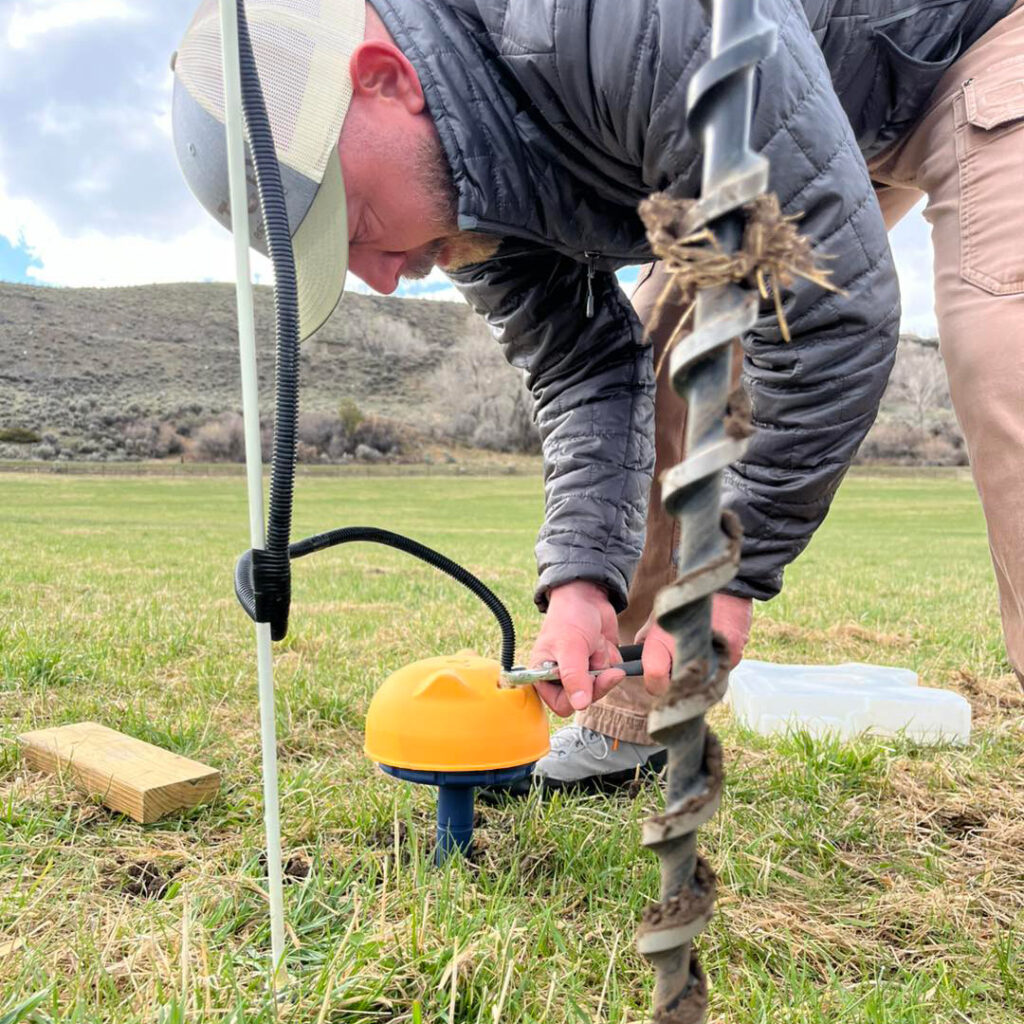
What stood out about CropX was the combination of straightforward hardware and a software platform that made sense to growers. Installation was manageable, the interface was intuitive, and the system provided actionable insights rather than raw numbers. Just as important, the company’s long-term vision aligned with Williams’ belief that irrigation decisions should be grounded in soil science, not habit.
When Williams couldn’t find local support for the technology, he stepped into that gap himself—first as a user, then as a dealer—bringing both the tools and the agronomic context to his region.
The early years weren’t effortless. Learning the platform, understanding soil moisture dynamics across different profiles, and translating data into decisions required time and focus. But once Williams gained confidence, it started working for him instead of the other way around.
On his own ranch, CropX data fundamentally changed how alfalfa was managed. With a growing season of just 90–100 frost-free days, precision mattered. Using consistent soil moisture data, Williams shifted from a traditional two-cut system to a four-cut program, aligning irrigation more closely with crop demand rather than calendar expectations.
The platform also changed how teams worked. Irrigators and operators had access to the same information, could see what needed attention, and could plan ahead. Nobody was waiting to be told what to do.
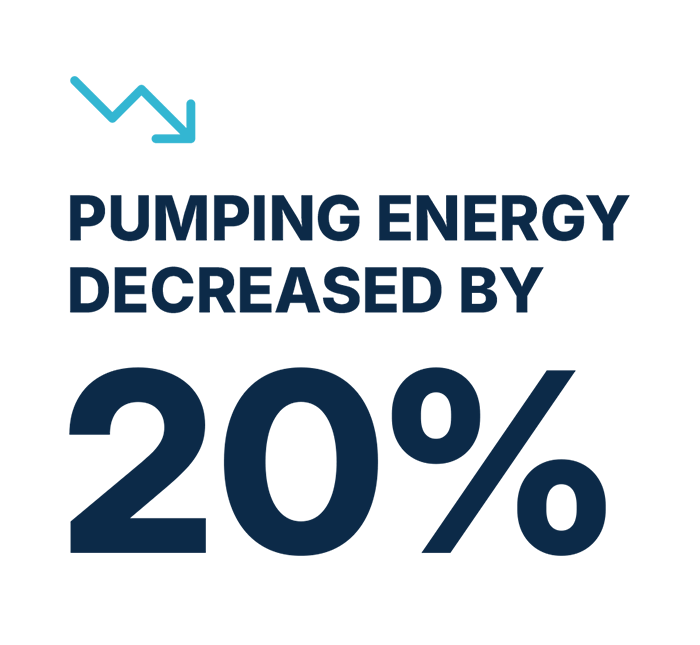
Alfalfa production doubled—from roughly three tons per acre to six—under the new four-cut system. Electricity for pumping dropped by an estimated 15–20%. Better timing meant water was applied when it mattered most, and held back when it didn’t.
Those operational gains translated into quality-of-life improvements as well. Teams worked with clearer direction, less second-guessing, and more confidence in daily decisions. “Everybody knew where we needed to be,” Williams says, “without someone standing over them.”
As Williams began advising other growers, similar patterns emerged. Barley producers reported yields in the 130–145 bushel-per-acre range—well above local averages—during their first year of data-driven irrigation. Pinto bean and sugar beet growers also reached the top end of historical performance, even in seasons with other agronomic challenges.
Across crops, the value wasn’t just higher yield. Growers understood what the data meant, how it connected to plant stress and root activity, and how to act on it. For many, it was their first experience getting ahead of irrigation instead of chasing it.

For Williams as a dealer, strong technical support proved essential. Fast answers, knowledgeable staff, and real-time help during installations or troubleshooting allowed him to solve problems quickly in the field and maintain grower confidence.
That support, combined with reliable hardware, enabled Williams to focus on what mattered most: helping producers understand their fields and make better decisions. Today, Pierced Heart Solutions continues to scale, with plans to integrate additional sensors and weather data while keeping the same core mission—removing emotion from irrigation and replacing it with clarity.
Julia brings with her more than 20 years of experience in corporate development, partnerships, M&As and business strategy.
Prior to joining CropX, Julia held roles such as Corporate Development Director at STK Bio-Ag Technologies, a leading global biopesticide company, and as Deputy Head of M&A at Caisse des Depots et Consignations in France. Earlier in her career, Julia served as an AVP at Lazard Freres Investment Banking and as a Manager at KPMG Corporate Finance.
Julia holds an MBA from ESSEC Business School in France.