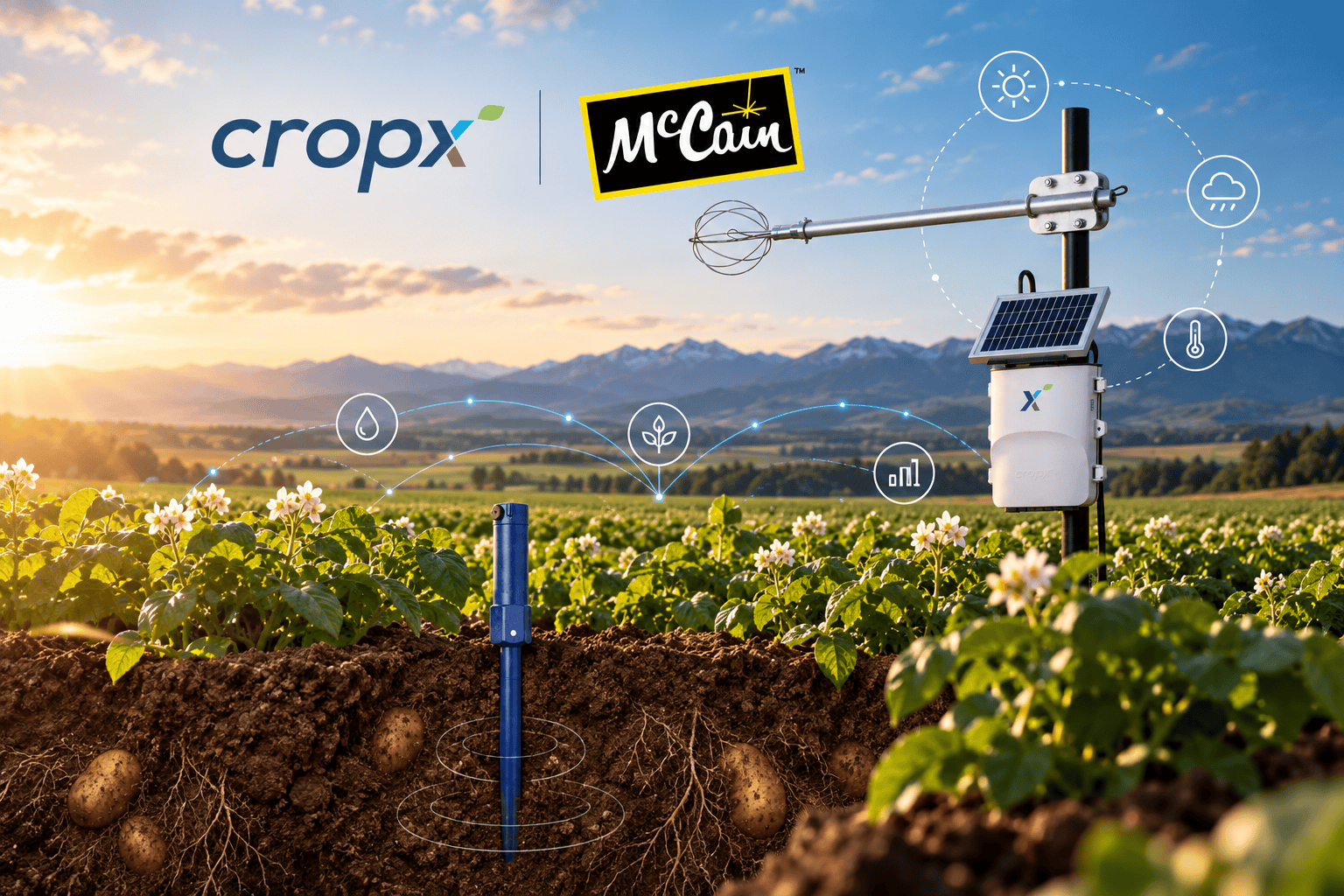
CropX has been onboarded as a co-collaborator, providing data and sensors to help the farm make irrigation and crop management decisions, particularly around water efficiency and soil health.
NEW ZEALAND – 13 October – Designed as an industry-scale research programme, the project will compare regenerative and conventional farming systems throughout a full potato rotation under New Zealand growing conditions. Over the next eight years, researchers will examine how different farming practices influence soil health, crop performance, water and nutrient use, resilience and long-term productivity, creating a robust evidence base to support future agricultural decision-making.
By combining commercial farming expertise, scientific research and continuous field intelligence over an entire potato rotation, the programme aims to generate practical evidence that helps accelerate the adoption of regenerative agriculture.
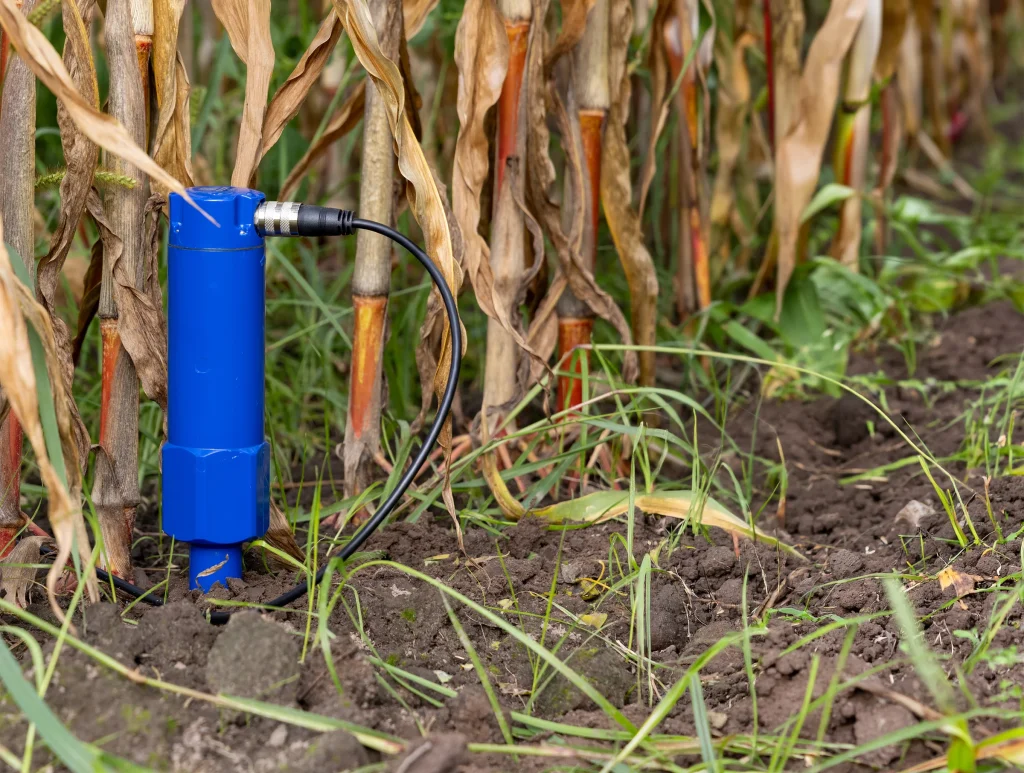
As a digital agronomy co-collaborator, CropX will provide its AI-powered digital agronomy platform, along with soil, actual evapotranspiration, and weather-monitoring technologies, as well as ongoing technical and agronomic support. CropX latest soil moisture monitoring Apex probes (60 and 90cm depending on the crop) will be present in all crops in the rotation, and the measurements gathered will be completed with weather information and satellite imagery.
The CropX platform will integrate and analyse continuous field intelligence, enabling researchers to evaluate regenerative and conventional farming systems throughout the programme.
Josh Opas, McCain Director Agriculture ANZ said:
“McCain Foods are excited to collaborate with CropX for their equipment to be installed at the Lincon Regenerative Farm demonstration site. Water use efficiency and optimal irrigation application is important for crop quality, yield and environmental stewardship”.
Professor Alison Bailey, Lincoln University’s Head of Department, Farms said:
“Research of this scale depends on continuous, high-quality data collected over many years. This work combines scientific rigour with commercial relevance and digital innovation, creating an important opportunity to better understand how regenerative farming practices perform under New Zealand conditions.”
Eitan Dan, Chief Revenue Officer, CropX Technologies, said:
“The most important advances in regenerative agriculture will come from long-term commitment and credible evidence generated under real farming conditions. We’re proud to work alongside McCain Foods and Lincoln University on a programme of this scale and to provide the digital agronomy platform that will help transform continuous field data into practical insights for growers, researchers and the wider agricultural industry.”
McCain has committed to implementing regenerative agriculture practices across all the acreage used to grow potatoes for the company by 2030, and long-term demonstration sites such as the Lincoln University McCain Foods NextGen Regenerative Farm play an important role in validating practices under local growing conditions and sharing learnings with growers. CropX technology will support variable-rate irrigation management, provide real-time insights into soil moisture differences between treatments, and help optimise spray timing through its disease warning platform.
Beyond the Lincoln University McCain Foods NextGen Regenerative Farm, the results will be used to validate the growing role of digital agronomy in enabling science-based sustainability programmes. By combining continuous field intelligence with long-term scientific research and commercial farming expertise, the project aims to generate practical knowledge that contributes to regenerative agriculture in New Zealand and informs the wider international discussion on productive, resilient and sustainable food systems. As an industry collaborator to the project, CropX supports pushing the boundaries of innovative technology integration on farm, aiming to improve input use efficiency.
Obtén más información sobre oportunidades de inversión y de colaboración.
Acerca de CropX Technologies
CropX es líder mundial en soluciones de agronomía digital y ayuda a los productores, las empresas agroindustriales y las empresas de alimentos a mejorar la productividad, la sustentabilidad y la eficiencia operativa mediante la toma de decisiones basada en datos. La plataforma de CropX combina sensores de suelo, datos meteorológicos, imágenes satelitales, modelos agronómicos, análisis impulsados por inteligencia artificial e integraciones de terceros en una única plataforma de gestión agrícola que atiende a clientes en más de 70 países. CropX cuenta con el respaldo de inversionistas estratégicos y financieros líderes, entre los que se incluyen NEC Corporation, Aliaxis, Innovation Endeavors, Finistere Ventures y otros líderes mundiales en los sectores de la agricultura y la tecnología. Obtenga más información en www.cropx.com.
About the Lincoln University McCain Foods NextGen Regenerative Farm
The Lincoln University McCain Foods NextGen Regenerative Farm will involve trialing leading regenerative agriculture practices combined with advanced technology on high-value crops in a 1:8 potato rotation. The eight-year trial will compare regenerative practices with conventional cropping methods in a mixed farm system. It will examine soil health, soil carbon, farm inputs, integrated pest management, water use, crop yields and profitability.
About McCain Foods
McCain Foods is a privately-owned, Canada-based global frozen food company committed to leaving a legacy for future generations through a strong focus on sustainability and helping to shape the future of sustainable farming. Visit the website here www.mccain.com
About Lincoln University
Te Whare Wānaka o Aoraki Lincoln University is New Zealand’s only specialist university focused on the land‑based sectors. Since 1878, the University has built a strong reputation for education and research that supports sustainable and productive land-based systems. Today, this distinctive heritage uniquely positions Lincoln University to tackle the complex global challenges facing the land, climate and agrifoo